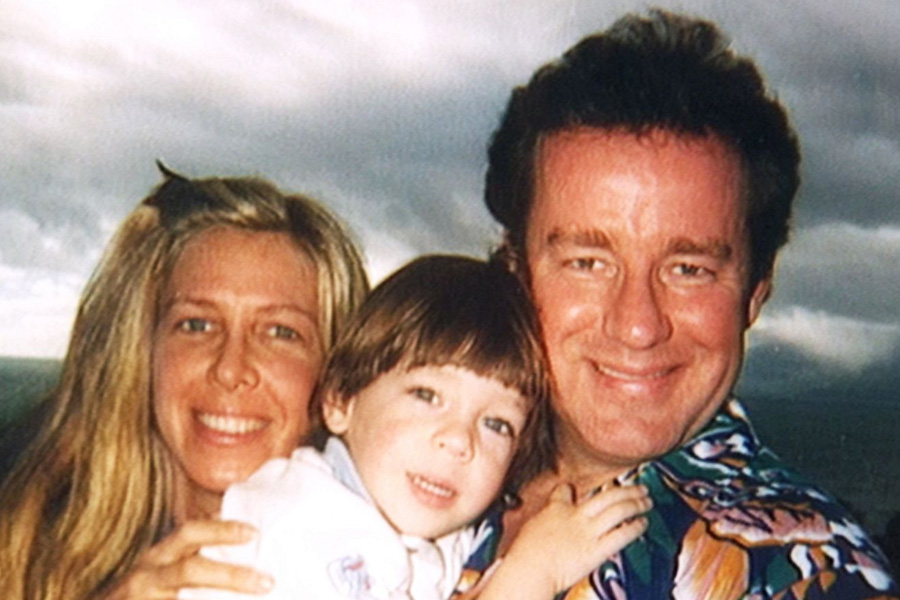
Basic Information
Brynn Omdahl remains a name tied to both private striving and public tragedy. Born Vicki Jo Omdahl on April 11, 1958, she came from Minnesota and later used the name Brynn in public life. She died on May 28, 1998, at age 40. She was most widely known as the wife of comedian Phil Hartman, whom she married in 1987. She was also the mother of Sean Edward Hartman and Birgen Anika Hartman.
Her story is often compressed into a few stark facts. That compression is unfair, because it erases the slower, less theatrical parts of a life. Brynn moved through modeling, acting ambitions, marriage, and motherhood during a volatile cultural decade. Her name became inseparable from one catastrophic night, but the years before that still matter. They show a woman living inside aspiration, domestic routine, and public scrutiny.
Early Life and Identity
Vicki Jo Omdahl was born on April 11, 1958, in Minnesota. Public references connect her with Thief River Falls and broader Minnesota origins. That detail matters because it places her within a specific regional and social texture. The Midwestern backdrop suggests conventional beginnings rather than immediate notoriety. Her later public name, Brynn Omdahl, marked a deliberate shift in presentation.
That shift likely reflected a common pattern in modeling and entertainment. Names can be sharpened, shortened, or refitted for visibility. Brynn sounds more polished and succinct than Vicki Jo. Such alterations were practical, not merely ornamental. They suggested mobility, reinvention, and an ambition to enter more glamorous circles.
The available portrait of her early life is fragmentary. It does not offer a neat, linear origin story. Instead, it presents isolated points: birthplace, birth date, family name, and later professional attempts. That kind of record often accompanies women whose public identities were built through proximity to fame. It is a familiar asymmetry. Their own development gets flattened by the louder person beside them.
Modeling and Acting Ambitions
Brynn was described as a model and an aspiring actress. That pairing tells us something about the era as well as the person. In the 1970s and 1980s, modeling often served as a bridge into performance work. The path promised visibility, autonomy, and possible upward movement. It also demanded appearance, discipline, and an uneasy negotiation with public attention.
Her acting record appears modest rather than extensive. That does not diminish the effort involved. Many people pursue performance careers with intermittent credits and long stretches of uncertainty. Small roles, auditions, and industry contacts form a hidden economy. They are not glamorous in the way finished screen fame appears. They are often precarious and repetitive.
Brynn’s name appears in recollections that suggest she remained close to artistic aspiration. She seems to have occupied that thin margin between participation and recognition. That margin can be maddening. It is where many careers stall without fully disappearing. The public tends to remember only those who cross the threshold into stardom, not those who linger near it.
Marriage and Family Life
Brynn married Phil Hartman in 1987. That marriage joined her life to one of the most recognizable comedic figures of the period. Hartman was a major television and voice talent, and his career expanded rapidly through the late 1980s and 1990s. Their home life unfolded alongside that momentum. The result was a family shaped by both ordinary domestic routines and extraordinary public exposure.
Their son, Sean Edward Hartman, was born around 1988. Their daughter, Birgen Anika Hartman, was born around 1992. Those dates matter because they define the family’s structure during a narrow span of years. By 1998, the children were still young. Sean was roughly 10, and Birgen was roughly 6. That age gap underscores the severity of the loss that followed.
Family life in such circumstances often becomes difficult to imagine from the outside. There are schedules, errands, school demands, and the ordinary maintenance of a household. There are also absences created by performance work, travel, and the pressures of celebrity. Brynn’s domestic role was probably shaped by those tensions. She lived in a house connected to public laughter, yet the private atmosphere could have been far more unsettled.
Public Persona and Private Reality
Brynn’s public identity never became a major independent celebrity profile. That absence shaped how later accounts described her. She was often treated as an appendage to Phil Hartman’s fame. That framing is convenient, but it is also reductive. It converts a person into a supporting reference point for someone more famous.
The problem with that habit is obvious. It obscures personal complexity. It makes room for cliché instead of scrutiny. A woman can be a spouse, mother, model, and aspiring performer without being exhausted by those roles. She can also be difficult, contradictory, wounded, or hopeful in ways public reports never capture. None of that is preserved well by headlines.
What survives in the public record is a sparse set of descriptors. Former model. Aspiring actress. Mother. Wife. Later, the central figure in a national tragedy. Those labels are factual, yet they do not explain a character. They tell us where the spotlight landed, not how she moved through the dark between moments.
The Final Date
May 28, 1998, became the date that defined Brynn Omdahl in public memory. On that day, both Brynn and Phil Hartman died in a widely reported murder suicide. The event reverberated through entertainment journalism, television retrospectives, and family remembrance. It transformed a private household into a public rupture. It also sealed Brynn’s name inside a story most people encounter only through grief and shock.
Dates can be brutal in that way. A whole life becomes an entry in chronology. Yet the date alone does not explain the conditions that preceded it. It does not show the accumulation of strain, the domestic atmosphere, or the broader pressures surrounding the family. It only marks the point at which everything stopped.
For the children, the consequences were immediate and lasting. For the public, the event became a grim reference point in entertainment history. For Brynn’s memory, it created an imbalance. The ending overwhelmed the beginning and middle. That imbalance is common in tragic biographies, but it remains intellectually unsatisfying.
Timeline at a Glance
| Year | Event |
|---|---|
| 1958 | Vicki Jo Omdahl is born on April 11 |
| 1987 | Brynn marries Phil Hartman |
| 1988 | Sean Edward Hartman is born |
| 1992 | Birgen Anika Hartman is born |
| 1994 | Public records note small acting related credits |
| 1998 | Brynn and Phil Hartman die on May 28 |
These dates sketch a compressed life arc. It begins with a Midwestern birth and ends with national notoriety. Between those points lie work, marriage, children, and a personal identity still partly obscured. The table is neat, but the life was not. That contrast is worth keeping in view.
Family Context
Brynn’s family history appears in public notices and genealogical references. Her father is named Donald Gene Omdahl. Her mother is Constance Faye Omdahl, née Arnold. References also mention a sibling named Gregory, sometimes called Greg Omdahl. These names matter because they restore dimensionality. They remind us that Brynn was embedded in a family network before she entered wider recognition.
Family names can feel dry when compared with celebrity drama. They should not. They are the prehistory of every public figure. They suggest childhood rooms, holiday meals, and local continuity. They also suggest that Brynn’s life was not built solely around Phil Hartman or the later tragedy. She belonged to a larger kinship field with its own memory and ordinary obligations.
That broader context keeps the account from becoming too narrow. It gives Brynn a lineage rather than a headline. It also points toward the quiet labor of family life, which rarely reaches print in full. The public tends to notice disruption more than continuity. In Brynn’s case, continuity deserves a firmer place.
Key Takeaways
Brynn Omdahl was born Vicki Jo Omdahl on April 11, 1958, in Minnesota. She worked as a model and pursued acting, though her public record remained modest. She married Phil Hartman in 1987 and had two children, Sean and Birgen. Her life is now most often remembered through the tragedy of May 28, 1998. That date should not erase the fuller shape of her story, which included family, ambition, and a quieter personal history.