Early Life and Education
Zila Netanyahu was born on 28 August 1912 in Petah Tikva, during a turbulent and formative era. Her birth placed her within a society still shaping its institutions, customs, and civic vocabulary. That historical setting mattered, because personal lives often carried national weight in that period. Her early years unfolded amid changing political conditions and communal ambition. She later pursued legal studies at Gray’s Inn in London, which marked a serious intellectual undertaking. This was not a decorative credential. It suggested discipline, analytic patience, and an aptitude for rigorous thought. Her education also connected her to a broader legal and cultural world beyond Palestine. That exposure likely widened her frame of reference and sharpened her exactitude.
Her name appears in several forms, including Tzila, Tzviya, and Cela Segal Netanyahu. Such variation is common in records shaped by transliteration and family history. It also hints at the layered identity many women of her generation carried. Zila lived through an age when formal education for women was neither routine nor trivial. Legal study in London therefore stands out as an intentional and uncommon choice. It placed her within a small circle of women seeking disciplined training abroad. That training did not produce a public law career, but it still mattered. Intellectual formation often leaves its deepest mark inside the home.
Marriage and Household
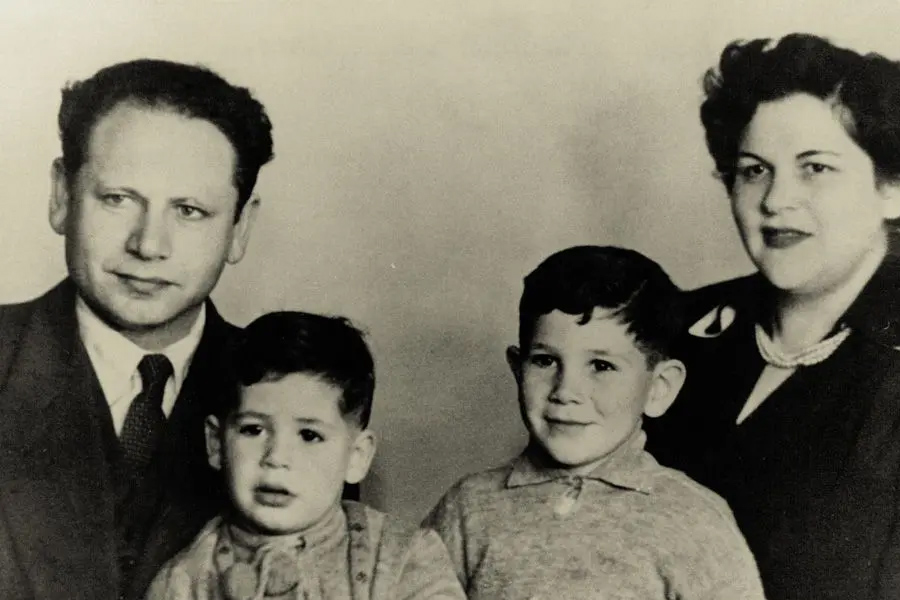
In 1944, Zila married Benzion Netanyahu, a historian and academic with strong public commitments. Their marriage became a durable partnership built around intellect, conviction, and family responsibility. Benzion’s scholarly life demanded travel, concentration, and endurance. Zila sustained the domestic structure that made such work possible. This role was not passive. It required judgment, stamina, and a strong sense of order. She managed a household that later became central to Israeli public life. The family sphere served as an incubator for ambition, argument, and discipline. That kind of environment can shape children more decisively than public institutions.
Her marriage also placed her at the center of an unusually consequential family. The Netanyahu household produced figures whose names would resonate across military, political, and literary spheres. Zila’s contribution was largely invisible in formal records. Yet invisible labor often underwrites visible achievement. She helped create the atmosphere in which the family could endure pressure and develop ambition. Quiet domestic work can be architectonic. In her case, it formed the basis for a family legacy that would stretch across decades.
Children and Public Paths
Zila and Benzion had three sons, each of whom pursued a distinct path. Yonatan Netanyahu was born in 1946 and became a commander in Sayeret Matkal. Benjamin Netanyahu was born on 21 October 1949 and later became prime minister. Iddo Netanyahu was born in 1952 and built a life in medicine, writing, and drama. The trio illustrates a family unusually concentrated in public life. Their careers diverged sharply, but each entered a realm demanding rigor. Military command, state leadership, and medical practice all require formidable discipline. Literary work adds another register, one shaped by language and imagination.
| Child | Birth Year | Public Role | Notable Detail |
|---|---|---|---|
| Yonatan Netanyahu | 1946 | Commander, Sayeret Matkal | Killed in Operation Entebbe in 1976 |
| Benjamin Netanyahu | 1949 | Politician and prime minister | Born 21 October 1949 |
| Iddo Netanyahu | 1952 | Physician, author, playwright | Worked across medicine and letters |
Yonatan became a national symbol after his death in 1976 during Operation Entebbe. That event gave the family a place in collective memory far beyond ordinary politics. Benjamin later entered statecraft and remained there for many years. His prominence brought scrutiny, controversy, and power in equal measure. Iddo followed a quieter but still notable public course. His work reflects a more private form of public service. The range of these paths suggests a household alive with expectation. Zila’s influence likely operated through example as much as instruction.
The Domestic Influence
Zila Netanyahu’s influence was not theatrical. It resided in habits, tone, and family discipline. A home can become a workshop for temperament. In her case, the workshop seems to have produced resilience, argument, and high standards. Children absorb more than lessons. They inherit emotional climates, expectations, and forms of endurance. Zila’s presence gave shape to that climate. She combined legal training with the practical burden of motherhood. That combination made her both intellectually equipped and materially essential. Few public biographies capture such work accurately.
Her role may be best understood as custodial and formative. She held together a family that would later navigate grief, military danger, political exposure, and public fascination. That task required more than affection. It required a steady hand and a mind able to balance competing demands. Domestic authority in such settings often remains unnamed. Yet it can be decisive. Zila’s life shows how private labor can support public consequence without seeking recognition. Her children entered domains where public attention is relentless. She prepared the ground from which that exposure emerged.
Family Legacy and Generational Reach
The Netanyahu family became part of the wider Israeli public imagination. Zila stood near the root of that story. Her grandchildren also entered visible spaces, continuing the family’s presence in civic and media life. This generational continuation adds depth to her legacy. It shows how one household can echo across time. Family memory is not static. It accumulates through each new public role and each renewed debate. Zila’s name appears less often than those of her sons, yet her position remains foundational.
| Relation | Name | Notes |
|---|---|---|
| Spouse | Benzion Netanyahu | Historian and public intellectual |
| Children | Yonatan, Benjamin, Iddo | Military, political, medical, and literary roles |
| Grandchildren | Yair Netanyahu, Avner Netanyahu, Noa Netanyahu-Roth | Publicly visible members of the next generation |
Her family tree is compact, but its branches reach widely. That density matters. It means a single domestic center influenced several public trajectories. The household became an instrument of continuity. It preserved memory while also producing actors in contemporary life. Such families are often scrutinized more intensely than others. Zila’s position at the center of one such family makes her historically significant, even without a public career.
Public Profile and Finances
Zila Netanyahu did not maintain a public professional portfolio. She is generally understood as a homemaker and family matriarch. Her legal education remained part of her biography, but not the basis of a long public practice. That distinction is important. It separates formal training from public profession. Many educated women of her era were constrained by family obligations and social expectations. Zila’s life reflects that tension. Her capacities were real, but her public footprint remained indirect. She was known through relationship rather than office.
There are no widely available public records detailing her finances or assets. That absence is typical for private family figures of her generation. Her life was documented chiefly through her relatives and their achievements. This makes her biography unusual in one respect. It is a story with visible consequences and limited institutional records. Such lives often require careful reading. Their importance lies not in job titles, but in influence. Zila’s influence operated through steadiness, education, and family stewardship. Those qualities rarely generate headlines on their own.
Extended Timeline
| Year | Event |
|---|---|
| 1912 | Born in Petah Tikva on 28 August |
| 1944 | Married Benzion Netanyahu |
| 1946 | Birth of Yonatan Netanyahu |
| 1949 | Birth of Benjamin Netanyahu on 21 October |
| 1952 | Birth of Iddo Netanyahu |
| 1976 | Death of Yonatan during Operation Entebbe |
| 2000 | Died in Jerusalem on 31 January |
The timeline compresses a life that unfolded mostly away from public stagecraft. Still, each date carries weight. The marriage in 1944 altered the family structure. The births in 1946, 1949, and 1952 established the next generation. The death of Yonatan in 1976 brought national sorrow into the family sphere. Zila’s own death in 2000 closed a life that had already shaped several public narratives. Dates are simple markers, yet they reveal the architecture of a biography.
Memory and Legacy
Zila Netanyahu is remembered less as a public actor than as a formative presence. Her legacy is maternal, intellectual, and structural. She helped sustain a family whose members would influence Israeli history in different registers. That influence was neither accidental nor merely symbolic. It grew from endurance, education, and a disciplined home life. Her story invites attention to the hidden labor behind public prominence. Many biographies prize the visible figure at center stage. Zila’s life reminds us that the stage is often built elsewhere.
Her memory also carries an element of austerity. She did not leave behind a celebrity persona or a long public archive. Instead, she remains discernible through the lives she supported and shaped. That kind of legacy is subtle, but it is not thin. It endures through family narration, national remembrance, and historical context. Zila Netanyahu belongs to a class of figures whose significance is architectural rather than spectacular. She stands as a durable source behind a family that became central to public life.
Key Takeaways
Zila Netanyahu was born in 1912 and died in 2000. She studied law at Gray’s Inn, though she did not build a public legal career. In 1944, she married Benzion Netanyahu and raised three sons: Yonatan, Benjamin, and Iddo. Her children moved into military, political, medical, and literary fields. Her household became a formative site for discipline and ambition. She is remembered as a matriarch whose influence was quiet, lasting, and consequential.