Early Roots in Delaware
Eleanor Darragh was born on November 23, 1934, in Delaware. Her beginnings belong to a distinctly American mid century milieu. The year carried its own austerity, with recovery still shaping many households. She entered life as the daughter of Edward John Darragh and Elizabeth E. Cekine. Those names supply a sturdy genealogical scaffold. They also suggest a family history with roots worth tracing.
Delaware often appears as a modest setting, yet modest places breed durable lives. Eleanor’s early story seems to fit that pattern neatly. Some family descriptions present her as the first in her family to attend college. If accurate, that detail carries notable significance. It implies discipline, aspiration, and a certain intellectual insurgence. Such traits often remain invisible in public biographies.
Marriage and Family Architecture
Family life became the central axis of Eleanor Darragh’s public identity. She married Rafael Bienvenido Cruz, a Cuban born preacher and father figure. Their partnership formed the nucleus of a family that later entered national attention. In private households, such unions are rarely simple. They require patience, adaptation, and a shared domestic grammar.
Their son, Rafael Edward “Ted” Cruz, was born in 1970. That single date altered the scale of the family narrative. A child born in one decade later became a national political actor. As his profile expanded, Eleanor’s name reappeared in media coverage. Mothers in public families often become retrospective characters. Their earliest years are rediscovered only when history turns spotlight toward them.
The Cruz family structure also includes grandchildren and extended relations. Caroline Cruz and Catherine Christiane Cruz are among the younger generation. Their presence reveals a multigenerational continuum. Family stories rarely remain fixed within one household. They braid across time, marriage, parenthood, and recollection. Eleanor stands near the center of that braid.
A Family Timeline Worth Noting
Certain dates organize Eleanor Darragh’s biography with unusual clarity. They do not explain everything, but they do provide orientation. The following timeline captures the most visible markers.
| Year | Event |
|---|---|
| 1934 | Eleanor Darragh was born in Delaware |
| 1970 | Her son Rafael Edward Cruz was born |
| 2016 | Her birth details entered broader public discussion |
This brief chronology shows how a private life can intersect with public history. The intervals between those years hold decades of ordinary labor. They include caregiving, household management, and family continuity. Such work seldom appears in headlines. Yet it shapes the emotional infrastructure of later fame.
The 2016 Public Moment
The year 2016 proved especially consequential for Eleanor’s visibility. During questions about her son’s eligibility for high office, family documents were released publicly. Those documents included her Delaware birth information. A private record thereby became a political artifact. The transition was abrupt and highly unusual.
That episode demonstrates how personal archives can become national currency. A birth certificate is normally a quiet document. In 2016, it acquired symbolic force. It was read, discussed, and repurposed within a larger political contest. Eleanor herself remained largely outside the frame. Still, her early life briefly became a matter of public scrutiny.
This kind of attention can feel oddly impersonal. It treats a family record as evidence in a broader argument. The individual behind the record may remain obscure. Eleanor’s story illustrates that paradox with precision. She became visible precisely because she was otherwise private. That is a common pattern in political dynasties.
Private Life and Public Absence
Eleanor Darragh does not possess a flashy public résumé. There is no elaborate corporate biography attached to her name. Public accounts emphasize her family role more than any professional itinerary. That absence should not be mistaken for emptiness. Many lives are industrious without being publicly legible. Domestic stewardship often leaves few formal traces.
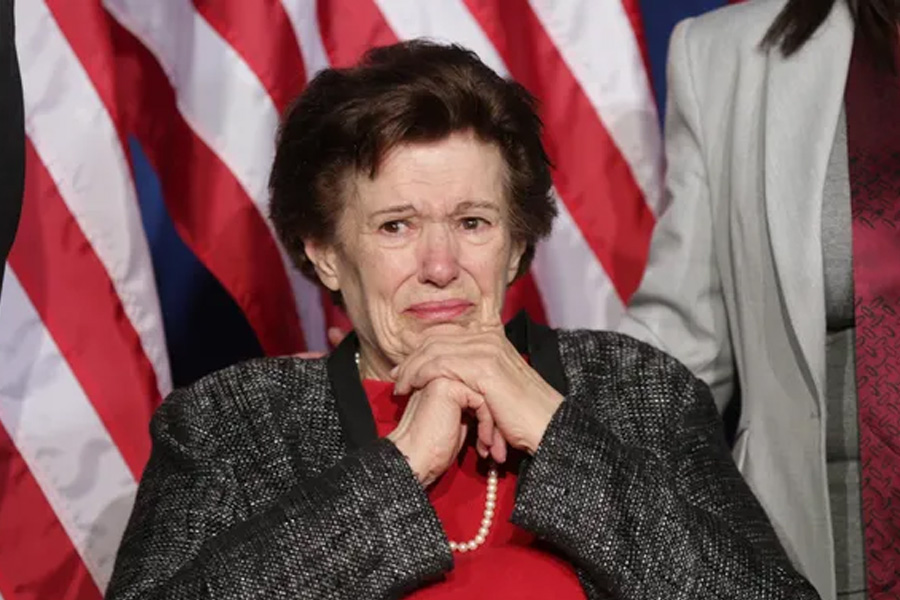
Her public image is therefore modest, intermittent, and relational. She appears in family centered references, photographs, and occasional campaign contexts. That kind of visibility is narrow but meaningful. It frames her as a mother, grandmother, and stabilizing presence. The broader media landscape tends to reduce such figures to supporting roles. Yet the supporting role often carries the emotional load.
Private individuals also live under a different grammar of fame. They do not cultivate brands or public platforms. They are seen through the lenses of children, spouses, and descendants. Eleanor fits that pattern closely. Her significance resides in proximity, continuity, and inheritance. Those are quieter virtues, but they are not lesser ones.
Names, Genealogies, and Small Irregularities
Biographical material about Eleanor Darragh contains some variation. Family trees sometimes list alternate names or earlier surnames. Such discrepancies are common in genealogical records. Spelling changes, incomplete documentation, and informal transmission all create ambiguity. The archive becomes a little ragged at the edges.
That raggedness is not unusual for family histories. It often reflects movement, remarriage, and scattered records. In Eleanor’s case, the available details point to a life partially shielded from public documentation. That scarcity produces interpretive noise. People fill the gaps with anecdote, inference, and inherited memory. The result is a biography with a few shimmering uncertainties.
Still, some essentials remain stable. Her birth date is recorded as November 23, 1934. Her birthplace is Delaware. Her son is Rafael Edward Cruz. Her husband is Rafael Bienvenido Cruz. Those anchors are enough to sketch the outline. The texture around them remains more intimate than institutional.
A Maternal Presence in a Political Household
It is tempting to imagine political families as fully public entities. In reality, they contain many private chambers. Eleanor Darragh occupies one of those chambers. She is visible through family connection rather than career performance. That distinction matters. It shows how maternal influence can persist without theatrical display.
Campaign families often rely on symbolic figures. A mother can signify continuity, cultural memory, or moral steadiness. Eleanor’s appearances seem to fit that symbolic register. She is not portrayed as a loud public strategist. Instead, she reads as a quieter familial constant. That constancy can be more consequential than commentary.
Her life also reveals the interdependence of generations. A child born in 1970 later reframes a parent’s biography. A family document from 1934 returns to public circulation in 2016. A grandmother’s name appears again through grandchildren. These returns create a recursive family narrative. The past is never fully past in such households.
Key Takeaways
Eleanor Darragh was born on November 23, 1934, in Delaware. She is best known as the matriarch of the Cruz family. Her husband is Rafael Bienvenido Cruz, and her son is Rafael Edward “Ted” Cruz, born in 1970. Public attention reached her in 2016, when family documents related to her birth became part of a political discussion. She maintains a notably private profile, with coverage centered on family relationships rather than career achievements. No reliable public net worth estimate is available. Her biography is shaped by continuity, maternal steadiness, and the peculiar visibility that accompanies public families.