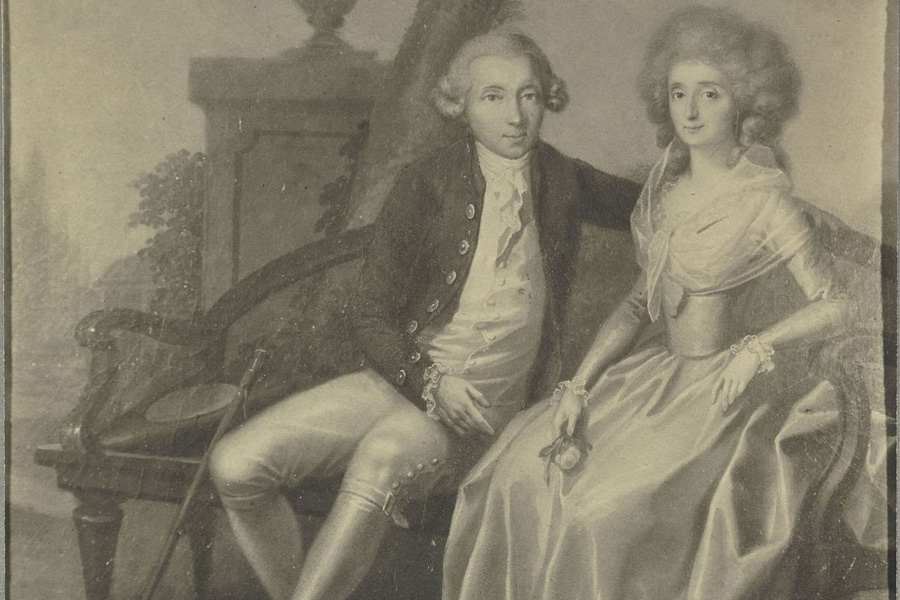
A Man Framed by Kinship
John Bartow Prevost belongs to a historical category often overlooked. He survives chiefly through association. His own record is pale, but his family constellation gleams with consequence. That contrast makes him intriguing. He stood near military distinction, elite society, and political turbulence. Yet he seems to have preferred or inherited a quieter orbit.
His name appears in family memory more than public chronicle. That does not make his life trivial. It makes it elusive. Many people in the late 18th century lived beyond the gaze of newspapers. They were shaped by households, inheritances, and alliances. John Bartow Prevost seems to have been one of them.
The Household That Formed Him
John was born into a family with layered prestige. His father, Jacques Marcus Prevost, served as a British army officer. That military identity carried status, discipline, and transatlantic movement. His mother, Theodosia Bartow Prevost, came from a socially rooted colonial family. She also possessed rare social intelligence. Her home became a site of conversation and connection.
The union of military authority and colonial standing created a formidable household. Such homes often operated like private institutions. They trained children in rank, decorum, and belonging. They also exposed them to public figures and shifting loyalties. John grew up in that atmosphere. It was a world of ledgers, visitors, and inherited expectation.
Family Ties That Defined Reputation
John’s maternal side anchored the family in older colonial networks. Theodosius Bartow and Ann Sands Stillwell represented that rooted lineage. Their names suggest property, continuity, and local respectability. These were not merely genealogical details. They were social assets. In the 18th century, family names often functioned like currency.
His paternal side carried imperial weight. Augustine Prevost, his paternal uncle, adds another military thread. The Prevost name therefore signaled service and rank. Such pedigrees often opened doors. They also imposed burdens. A young man in John’s position could be measured against ambitious relatives. Even silence could appear meaningful in such a family.
Theodosia Bartow Prevost and Her Social Reach
Theodosia Bartow Prevost deserves special attention. She was more than a mother in a notable genealogy. She was a social engine. After Jacques Marcus Prevost died, her remarriage altered the family’s public profile. She married Aaron Burr, one of the most recognizable political figures of the era. That marriage shifted the household into a brighter spotlight.
The remade family moved within a sharper political sphere. Burr was not a minor actor. He occupied the national stage and drew attention wherever he traveled. A home attached to such a figure became charged with significance. John would have seen ambition at close range. He would have observed how marriage could reorganize a family’s identity overnight.
Aaron Burr and the New Public Orbit
Aaron Burr’s presence changed the rhythm of the household. Political conversation likely deepened. Social visits likely intensified. Private domestic life and public intrigue began to overlap. That overlap is important. It means John lived near events that historians still discuss. He did not need office to inhabit history.
The Burr connection also complicated the family’s reputation. National figures attract admiration and suspicion in equal measure. Burr was especially magnetic in that regard. His prominence would have amplified the visibility of everyone around him. John thus inhabited a family theater with many observers. Yet he remained a figure at the edge of the spotlight.
Theodosia Burr Alston and the Family’s Public Memory
John’s half sister, Theodosia Burr Alston, became one of the family’s most famous members. She was known for education and refinement. In 1801, she married Joseph Alston, adding another political link. Her life embodied cultivated ambition. Her later disappearance at sea in 1813 transformed her into a lasting historical sorrow.
That event became a powerful family marker. It cast a long shadow across the family narrative. It also compressed John’s visibility. Public memory often selects one dramatic story and forgets adjacent lives. Theodosia’s disappearance is one of those moments. It fixed the family in the imagination. John’s quieter existence was then pushed farther into obscurity.
A Family Made of Social Capital
The Prevost, Bartow, and Stillwell names formed an intricate web. Each branch contributed something distinct. Military service brought prestige. Colonial lineage brought rooted legitimacy. Political marriage brought visibility. These elements combined into a dense social capital. That capital mattered deeply in the 18th and early 19th centuries.
A household like this did not merely belong to society. It helped define it. Such families circulated through estates, correspondence, and formal visits. They cultivated influence through marriage and hospitality. Their children inherited both opportunity and scrutiny. John was one such heir. He likely possessed advantages that left faint traces, not bold declarations.
What We Can Infer About John Himself
Direct evidence about John’s career remains thin. That thinness is itself revealing. It suggests a life not dominated by public office or military command. He may have managed private affairs. He may have lived from family resources. He may have preferred domestic steadiness over public ambition. Each possibility fits the available outline.
The broader family context implies some measure of security. Wealth often permitted discretion. Not every heir pursued a public path. Some maintained estates, oversaw property, or remained within the household economy. John may have occupied one of those quieter roles. Such lives can be difficult to reconstruct. They are often visible only in probate references or family records.
The Archive and Its Silences
Historical archives favor drama. They preserve wars, elections, and notorious names. They are less generous toward men like John Bartow Prevost. Yet absence is not insignificance. It can indicate a life lived within private frameworks. It can also reflect damaged records or scattered documentation. Either way, silence deserves interpretation.
Researchers often search for small fragments. A baptismal note can matter. A probate list can matter. A household account can matter. These scraps restore texture to otherwise obscured lives. John’s story probably survives in this fragmented manner. The archive offers contours rather than certainty. That is common for many family members of prominent figures.
Timeline of Family Markers
Several dates help organize the family’s story. The late 1700s likely mark John’s birth window. The 1790s brought Theodosia Bartow Prevost’s remarriage to Aaron Burr. That union placed the family in a more public arena. In 1801, Theodosia Burr Alston married Joseph Alston. In 1813, she vanished at sea.
These dates do not narrate John’s life completely. They do provide a scaffold. Family history often depends on such markers. They reveal the pressure points around which private lives form. John’s life likely unfolded between these public milestones. His daily world may have been less dramatic, but no less real.
Comparing Public Figures and Private Lives
It helps to compare John’s profile with his relatives’. Burr entered national politics. Theodosia Burr Alston became a celebrated daughter of intellect and consequence. Jacques Marcus Prevost embodied imperial military service. Augustine Prevost extended that martial lineage. John, by contrast, remains comparatively subdued. That difference should not be mistaken for lesser value.
Private lives often sustain the surrounding structure. They preserve property, memory, and household continuity. They also absorb the shocks of fame and scandal. John may have been one of those stabilizing presences. Such figures rarely acquire biographies. They nonetheless shape family endurance. Their importance is relational, not theatrical.
Why John Bartow Prevost Still Matters
John Bartow Prevost matters because he reveals how families operate across public and private spheres. He sits where aristocratic residue, colonial inheritance, and republican politics converge. His life demonstrates that history is not only made by famous actors. It is also inhabited by their relatives, retainers, and inheritors. Those figures keep the social machinery moving.
He also illustrates the limits of the archive. Some lives are documented through headlines. Others survive through family connections and circumstantial inference. John’s story belongs to the latter category. That does not diminish its value. It invites a more careful historical imagination.
Key Takeaways
John Bartow Prevost was part of a distinguished family with military, colonial, and political ties. His father, mother, stepfather, and half sister all linked him to major historical currents. Yet his own public footprint appears modest. That modesty makes him historically interesting. It suggests a life shaped more by household influence than by office or notoriety.
His family background included British army service, elite social standing, and connection to Aaron Burr. Theodosia Burr Alston’s fame and disappearance in 1813 further intensified family memory. John remained near these dramatic events, but not at their center. He represents the many quiet figures who lived inside prominent families. Their stories are harder to trace, but still essential to the full historical picture.